


INSPECTORS say drug use is a “significant threat to stability and safety” at a local prison.
It was highlighted in a report following an unannounced inspection of HMP and YOI Swinen Hall which also said the prison lacked the resources to tackle the problem.
HM Inspectorate of Prisons carried out the checks between August and September.
It said that 12 key concerns had been identified and added that “immediate attention” was needed to improve outcomes for prisoners.
“The availability of drugs had become a significant threat to stability and safety in the prison.
“The average mandatory drug testing positive rate was very high, at around 45% in the last year, and had peaked at almost 55% in May 2024.
“Funding to improve gate security and the searching of staff had not been provided and links with the police and other criminal justice agencies were not well developed or sufficiently supportive with respect to the challenges faced by the prison.
“The drug of choice was cannabis and we regularly smelled this when walking around the prison. There was some good, coordinated work between leaders in drug strategy, safety and security, and they had prioritised their efforts on addressing both demand and supply.
“However, many prisoners we spoke to perceived cannabis use as socially acceptable, which made reducing demand for it very difficult.
“Over 8,000 intelligence reports had been submitted in the previous year. These were dealt with promptly, but a lack of resources often meant that some actions, such as cell searches or suspicion drug tests, were not completed.
“Recent support from the regional team had allowed more searching to take place and had yielded some good finds, including weapons, mobile phones and drugs.”
The inspectors also said that while observed interactions between prisoners and staff had been positive and respectful, prisoners themselves said that some officers were “dismissive or unhelpful”.
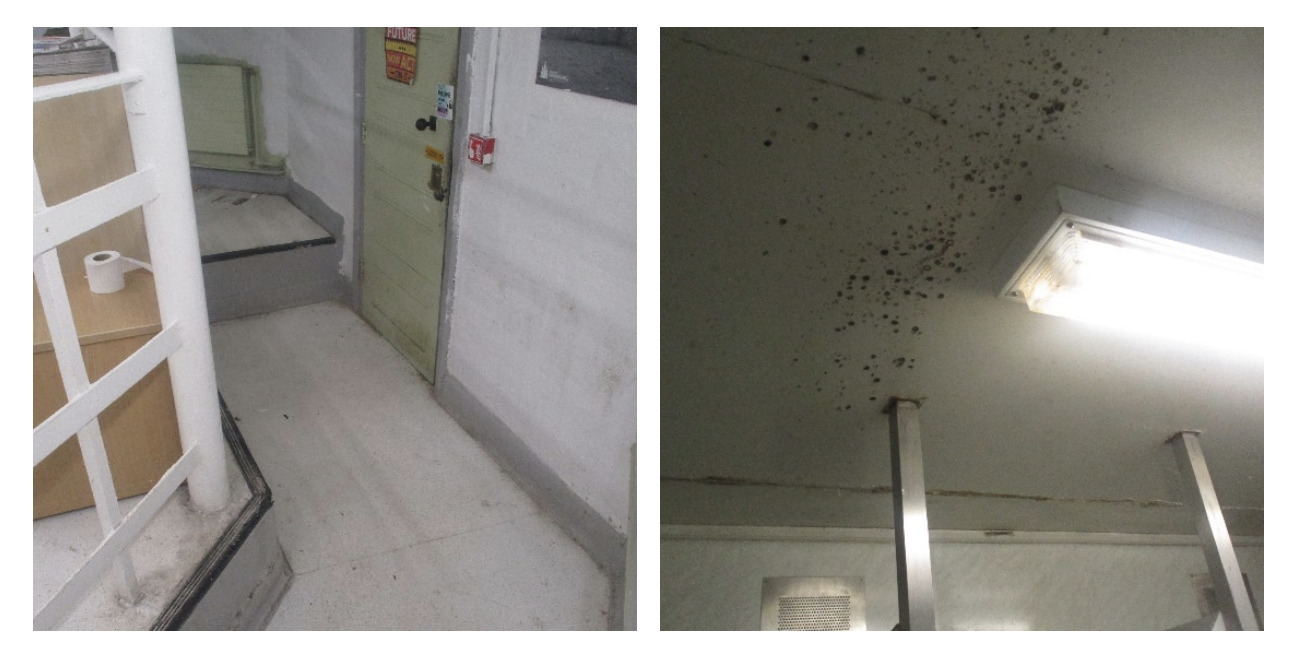
Issues were also raised over the state of some facilities at the prison.
The report said:
“Outside areas were well maintained, clean and tidy, but most communal areas on the wings were worn and very dirty.
“Not all staff on the wings made sure that an effective cleaning regime was carried out.
“Most showers lacked privacy and needed refurbishment to address the poor ventilation, which was causing mould to grow.
“The kitchen was reasonably clean, but the flooring and walls were damaged. Most serveries were kept clean but few prisoners wore appropriate clothing while serving food. Food hygiene training took place, but records were not up to date.
“Some food trolleys were very dirty.”
“Very poor for almost all prisoners”
The report said that around 30% of prisoners were locked up during the working day.
“Time out of cell was poor for too many prisoners.
“Our survey showed far more negative outcomes for prisoners than at other category C prisons we have inspected since November 2023.
“Time out of cell during the week varied depending on prisoners’ employment status and their level of the incentives scheme. Around one-fifth of prisoners were unemployed and had only one hour and 45 minutes a day unlocked.
“The weekend regime was very poor for almost all prisoners, with only 90 minutes out of their cell each day.
“Those attending education, training or work had a better experience. The amount of time unlocked was around five hours a day for those in part-time activity and seven hours for those in full-time activity.”
Other areas of the report called for improvements around contact for prisoners with those beyond the prison walls.
The inspectors said:
“Overall, help for prisoners to maintain or re-establish ties with their families, friends or those who had supported them while in care was not good enough and did not meet the full extent of need.
“In the last six months, about 60% of prisoners had yet to receive any face-to-face social visits, which was a concern given the youth of the population and how they might have struggled without this contact.
“The children and families team was well led, but the contract was poorly resourced with under two full-time equivalent staff. Only the manager completed individual casework and the maximum number of prisoners she could support at any on time was just 25. The team also had to run family days, as well as staffing the visitors centre every weekday.
“The social visits experience needed improving in several ways. There was no opportunity for visitors to buy refreshments in the visitors centre, despite many having had long journeys to the prison, and the cafe in the visits hall did not open until half an hour into the session, causing long queues.
“Visit sessions often started late and finished early, and the hall was drab.
“There was a good, creative range of family days for those who were receiving social visits. Those run by the Prison Advice and Care Trust included an event for prisoners who had previously been in local authority care to spend time with the most important people who had supported them during their childhoods.
“None of the staff we spoke to knew exactly how many prisoners were fathers, which meant that the level of need was unknown.”
The full inspection report can be viewed online.


